Thoughtful Data: A Guide to Empathy and Equity in Data Communication
I’m thrilled to share that my new book, Thoughtful Data: A Guide to Empathy and Equity in Data Communication, is officially available for pre-order.
The book grew out of the Do No Harm Project at the Urban Institute—those guides on equity, accessibility, and data privacy that many of you have read and shared over the years. My co-author and longtime collaborator Alice Feng and I went back to our sources, which included nearly 150 interviews with researchers, journalists, designers, data scientists, and policy experts, and built something more comprehensive: a framework for thinking critically about data work across the full lifecycle, from collection through communication.
The central argument is simple but worth saying plainly: foregrounding equity in data work isn’t at odds with rigor. It is rigor. That means rethinking the everyday decisions most of us make on autopilot — the language we use, the categories we define, the chart defaults we never question, the communities we forget to consult.
A chart can be 100% accurate and still cause harm. This book is about why—and what to do about it.
What we tried to do was pull all of the content from the seven Do No Harm Guides into a single volume—with additional content from new interviews and research—and organized it as follows:
Introduction
Empathy in Data
The Principles of Community-Based Research
Equity in Data
How to Embrace Context and Complexity
How to Use Equitable and Inclusive Language
How to Order Data Purposefully
How to Use Colors
How to Use Icons and Shapes
Maps
Accessibility in Data Visualizations
Gatekeepers and Organizations
Conclusion
I think the biggest additions to this work are more focus on interactivity and motion; an entire (long) chapter dedicated to creating equitable maps; and more discussion of community-based research. We’ve also expanded many of the other sections, drawing on new interviews we’ve conducted, new research from others, and new examples that demonstrate how, and how not to do data work through a lens of equity and inclusivity.
I recognize that we are in a moment where the pushback against ‘diversity, equity, and inclusion,’ and ‘wokeness’ feels like it’s at a fever pitch, but for those of us who wish to do data work that everyone can use and everyone can participate in, the lessons and strategies we discuss in the book will resonate.
It’s written for anyone who works with data, regardless of technical background. We don’t offer concrete ‘right’ and ‘wrong’ answers to these questions, but provide ways that everyone working with data—anywhere in the data-to-communication pipeline—can do so more equitably and inclusively.
As you may know, pre-orders can be really important to help a book’s success, so if you’re able to swing the $34.95 list price ($18.35 ebook), I’d really appreciate it if you could head over to Amazon (or wherever you get your books) and order your copy today.

Reimagining Civic Participation: The Digital Democracy Project
I have a new episode of the podcast out in your feeds where I talk with Ramon Perez, Executive Director of the Digital Democracy Project, about how they are using secure mobile voting technology to give citizens a real-time voice in legislation. Ramon explains how the platform lets verified, registered voters weigh in on bills being debated in Congress and their state house—and then scores legislators on how closely their votes match what their districts wanted. We dig into how AI, including a RAG-powered chatbot called VoteBot, helps everyday citizens parse thousands of pages of complex legislative text. We also discuss digital security, participatory budgeting, and Ramon’s ambitious goal of expanding the platform to all 50 state legislatures by 2027.

Fun Graphs
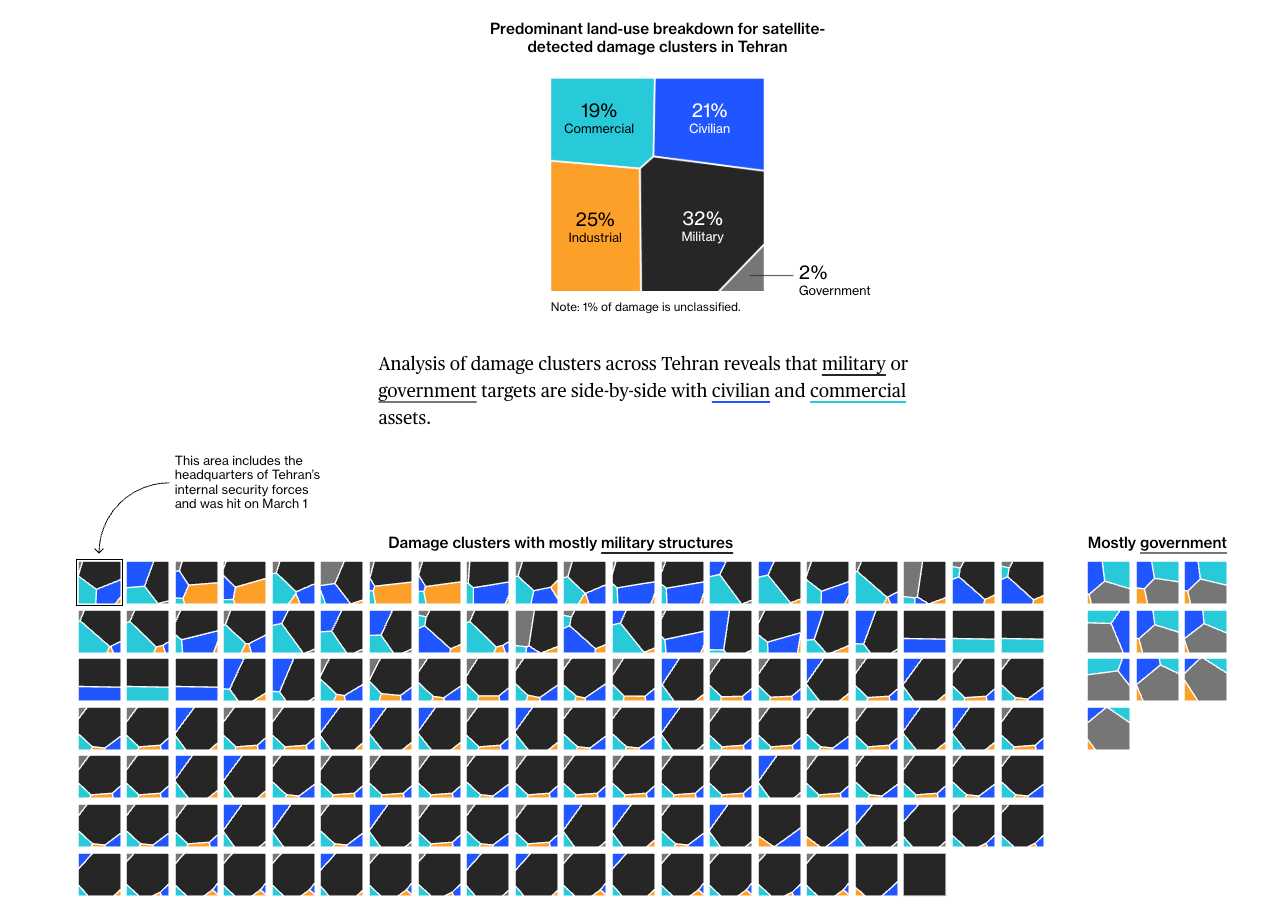
I don’t know if I’d call this “fun,” but the folks at Bloomberg created these small multiple Voronoi diagrams showing missile damage across Iran.